Russ Stewart: London

On a recent trip to Zaragoza, Spain, I was impressed with the scale and quality of Roman ruins which included significant remains of an early 1st century AD, 6,000-seat theatre, built for a town of only 18,000 souls
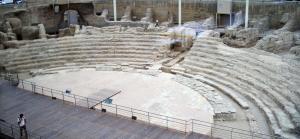
I was also impressed by the 200 km/hour train ride from Tarragona (which also has extensive, well preserved Roman construction remains, including an amphitheatre and an aqueduct).
Growing up in the 70s opposite Bearsden’s Douglas Park golf course, (and the nearby burn full of salvageable golf balls) I often wandered across the fairway to the tree line to play on a dodgy rope swing dangling from one of the heftier trees.
Nearby was a patch of stony ground which formed part of the base of the Antonine Wall.
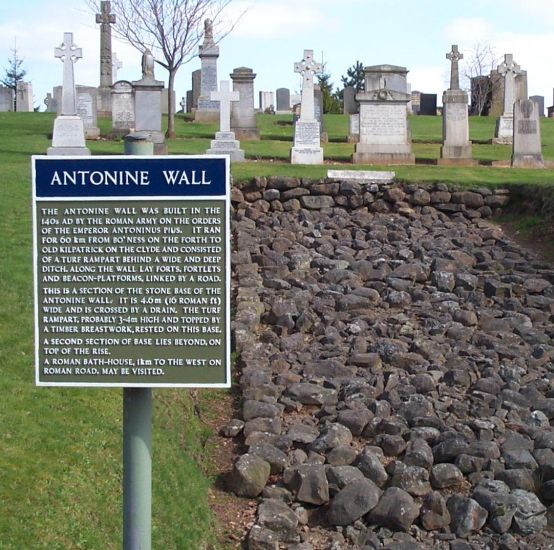
The Antonine wall was constructed by the Romans during 2nd century AD at the order of Emperor Antoninus Pius. It had a stone base and a turf upper construction.
The Romans were not going to invest too much in Scotland it
seemed.
In contrast, whilst the natives of Zaragoza basked in the sun, enjoying tales of the empire, Roman legionaries and auxiliaries were shivering on the Antonine wall repelling early versions of Glaswegian neds and eating turnips instead of spag-bol and sun-dried tomatoes.

I played a bit of golf in my early teens, though not at Douglas Park.
The nine-hole Ruchill public course was 5p a round but one had to be wary of the locals, probably descended from Roman-era neds, who liked to steal golf clubs.
I recall a round being interrupted by an encounter with a police cordon surrounding a corpse, in the rough, with a suspected axe wound.
Fortunately, Ruchill Course permitted the application of ‘winter rules’ which granted modification to the lie of the ball.
Oxford geneticist, Professor Sykes, reports that 1% of current Scots DNA is derived from the Tuareg tribesmen of North Africa.
Most likely they were the Roman Legion Auxiliaries defending the wall – cheer up lads, only 20 years to go for your army pension.
My old school, Bearsden Primary is located on ‘Roman Road‘.
Imagine the surprise and commotion in the 70s, when nearby residential construction work was halted due to a find of significant Roman ruins, including remains of a centrally heated sauna.
Home comforts for the few perhaps.

We Caledonians like to think that we halted the Roman Empire’s northern expansion.
Stopped them in their tracks.
Indeed, that may be the case, however the lack of Roman theatres, arenas and other cultural edifices suggests that Roman bureaucrats did a cost/benefit analysis and deemed it not worth the sesterces.
Looking north to the Campsie Fells they plausibly calculated that it would take a dozen acres to raise enough gristle for a couple of kebabs, realising that the boggy hills were not suited to their dinky leather skirts and open toed sandals anyhow.
I remain amazed at the achievements of the Romans.
Glasgow to Jerusalem is a long old hike.
The Roman Army’s last campaign was in the 14th century, in the eastern empire, hence that organisation was active for 2,000 years.
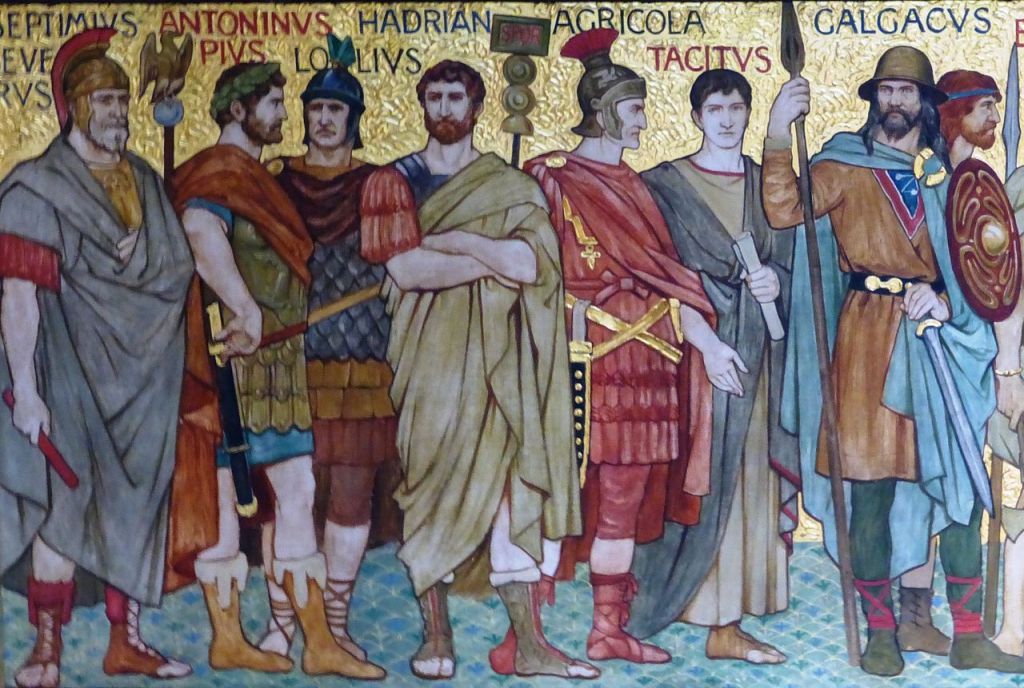
However, there are only a few scribbles from Tacitus, about the “nasty little Britons” and “red haired, large limbed Caledonians” of their
northern border.
Discover more from
Subscribe to get the latest posts sent to your email.
 onceuponatimeinthe70s.com
Very interesting stuff. I think the oldest thing near where I grew up was my grade three teacher. Bless her heart.
LikeLiked by 2 people
😀 😀 😀
LikeLiked by 1 person