Paul Fitzpatrick: April 2024

Colin and I were recently invited to contribute to the TURNTABLE TALK section on Dave Ruch’s blog, ‘A Sound Day.‘, a great site to visit and satisfy your musical curiosity on all genres of music.
Dave’s brief was to write about one of our favourite female artists to celebrate International Women’s Day. My thoughts turned immediately towards the likes of, Joni Mitchell, Aretha Franklin and Carole King, all favourites of mine, but as good as they all are/were, none of them were able to do what this lady did.
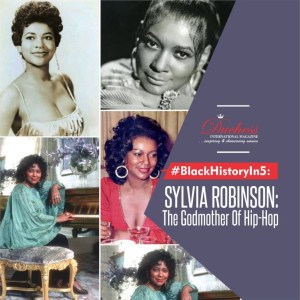
Sylvia Robinson (nee, Vanderpool) was a native of Harlem, a prodigious talent from an early age, her musical career kicked off aged 14 as ‘Little Sylvia’, in the 50s, performing Bo Diddley covers.
An accomplished musician, she soon progressed to playing guitar on Ike and Tina Turner sessions before setting up her own record label in the late 60s, ‘All Platinum Records’ with husband Joe Robinson.
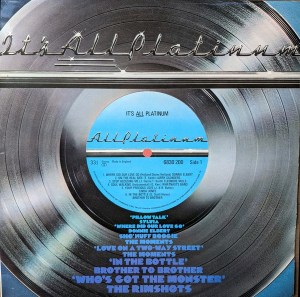
My first brush with Mrs. Robinson came about in 1975 when I bought a soul compilation called ‘It’s All Platinum’, scanning the sleeve, I failed to recognise many of the songs or performers, however the track that tipped me over the edge was ‘Pillow Talk’ by Sylvia…. a silky-smooth soul anthem with a driving hi-hat, straight out of the Marvin Gaye playbook.
Robinson had originally penned the song ‘Pillow Talk’ for Al Green but he’d turned it down as he felt it was too provocative.
Unbowed, Sylvia recorded and released her own version, ignoring Al Green’s advice by turning the provocative dial up to the max.
Always the pioneer, the lascivious groans and heavy breathing on ‘Pillow Talk’ predate Donna Summer’s orgasmic climaxes on “Love to Love You Baby” by a couple of years.
Despite the fact that some radio stations instructed their DJs to edit the track for fear of offending priggish listeners, the song was successful and went on to become a top 10 record in the US and UK.
Sylvia’s next big hit ‘Shame, Shame, Shame’ came courtesy of Shirley & Company, a manufactured duo made up of R&B singer Shirley Goodman and male vocalist Jesus Alvarez.
Selected for their strong vocals, they were cherry-picked by Robinson who wrote and produced the song.
‘Shame, Shame, Shame’ would go on to be a global smash for the label, reaching the top 10 across North America and Europe as well as topping the Billboard Soul/Disco charts, and with its Bo Diddley riff the song was, and still is, a dance-floor-filler today.
By the mid 70s, Robinson’s musical shapeshifting had already seen her progress from session-player to performer to songwriter to producer and then on to record label CEO…. but she wasn’t finished there.
Always culturally aware, in the late 70s Robinson identified an emerging scene in the Bronx where young people were MCing, scratching and break dancing at street block parties.
Inspired, she formed a new label – ‘Sugar Hill Records’.
With the genre very much in its infancy no one had taken the first step to record or release a hip-hop track yet, but Robinson was about to change all that.
Robinson’s first act on setting up her new label was to create a group using three of the best local MC’s and to hire a band to recreate the groove from Chic’s ‘Good Times’ which the band then rapped over.
That’s how the first rap single, “Rappers Delight” by The Sugarhill Gang came to fruition in 1979, and the rest as they say, is history.
Rappers Delight crossed over from a NY borough to every radio station on the planet, eventually selling fourteen million copies and paving the way for rap as a commercial genre.
Building on the success, Robinson signed Grandmaster Flash and the Furious Five (who coined the term hip-hop) to the label, and co-wrote and produced further hip-hop classic’s like “The Message” and “White Lines”
Exploring social themes, “The Message” and “White Lines” were early examples of ‘politically conscious hip-hop’, influencing and paving the way for bands like Public Enemy and NWA.
On a roll, the Sugarhill roster soon began to grow, boasting the biggest names from the early rap scene and for the next few years Robinson could do no wrong, capturing 26 gold records and securing her reputation as the ‘The Godmother of Hip-Hop’….

Sugarhill Records would eventually run into a cocktail of issues, including, breaches of copyright, (sampling other artists without permission e.g. Chic’s Good Times), plus, the times they were a-changing and Sugarhill was soon facing competition from all the major record labels who could now see dollar signs based on Sugarhill’s success.
With music in her blood, Robinson set up a new label called Bon Ami records in 1987 but she was unable to replicate her previous successes.
Sadly, Robinson passed away in 2011 aged 76, survived by three sons.
The term OG (Original Gangster) is banded about a lot these days and is typically used as a tribute to hail someone as Classic, Authentic and Old School, a pretty apt description for Mrs Sylvia Robinson.
Discover more from
Subscribe to get the latest posts sent to your email.
 onceuponatimeinthe70s.com
thanks again for taking part Paul! I had heard of, and remembered, several of those singles but had no idea that one woman was behind them all. She was pretty impressive getting that much music to the masses.
LikeLiked by 2 people
Well worth revisiting this post. She was a rare individual with vocal talent and an eye for the business.
LikeLiked by 2 people
A very good read 👍
LikeLiked by 2 people
Thanks Paul…I’ve checked her out since more.
LikeLiked by 2 people
While hip hop isn’t my cup of tea, kudos to Sylvia Robinson for all her impressive accomplishments!
LikeLiked by 2 people
An impressive story, and career. Interesting read!
LikeLiked by 2 people