Our generation remembers when Rock ‘n’ Roll was a singer backed by a guitar, bass and drums. Maybe a piano or organ on occasion and rarely a compact two or three player horn section or a couple of backing vocalists. By the late psychedelic sixties bands wanted a bit more. Something a bit more exotic and lush to fill out their sound.
Enter the Mellotron.
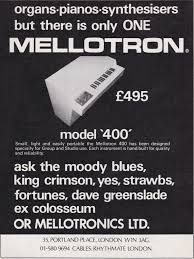
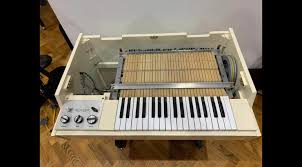
The Mellotron was a cross between a keyboard and a tape recorder. Pressing down a piano key engaged a loop of prerecorded magnetic tape that produced an eight second note through a system of rollers, springs, cranks, sprockets and bicycle chains in an effort to reproduce strings, flutes, brass, choral voices and the like. Effectively, listening to a Mellotron was like listening to a recording of a recording. What gave it away from the real deal was the constant wow and flutter (and I don’t mean a good day at the race track) of a mechanical device like a ‘wobbly’ tape deck or warped vinyl record.
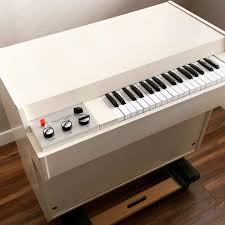
The Bradley brothers from Birmingham started Streetly Electronics in1963, evolving the similar Chamberlin. They also generously payed Mr Chamberlin out even though he had not thought to patent his invention.
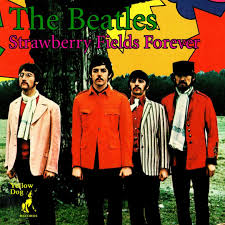
One of the first bands to utilise the instrument was Manfred Mann (before he went digging for his Earth Band). David Bowie got ground control to employ a young Rick Wakeman to fill out his sound. I guess the stylophone alone was just not cutting it. And who can forget the Beatles breathy flute like intro to ‘Strawberry Fields.‘
The Mellotron seemed mandatory on every Moody Blues track for the best part of a decade.
The pomposity of prog rock decreed that the Mellotron was de riguer and Yes, Genesis and King Crimson concurred. The Musicians Union weren’t so keen and tried to have the instrument banned on the British Broadcasting Company (BBC).
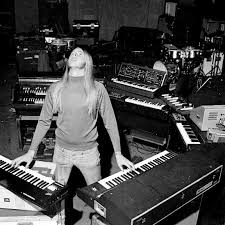
The addition to the keyboardists armoury wasn’t without it’s problems. It cost a fortune, weighed a ton and didn’t like being moved. Tapes and tape heads would mis-align requiring a virtual rebuild before every gig. Not ideal for the busy touring band. Maybe that’s why Rick Wakeman set his two alight in his back garden or maybe he’s jut a grumpy old man !
There were competitors. Birotron, Orchestron and Mattel Optigon but none could compete with the success of the Streetly Electronics brothers. A financial and trademark dispute in 1976 led to the name being acquired by an American outfit and the Bradley’s rebranding as Novatron.
With the advent of digital technology, the writing was on the wall and Streetly Electronics went into administration in 1986.
In these days of whiz bang downloads and apps you can avail yourself of VST plugins (?) M-Tron Pro, New Mello II, Nanotron, Tapeotronic and many, many more for your own magic Mellotron moment.
I find it reassuring in this AI world that the sounds many want to emulate are those from fifty years ago. Fender Rhodes, Wurlitzer piano, Hammond B3 organ and those are just the keyboards ! And yes you can now add digital wow and flutter to your musical creations.
Excuse me as I prise my old and weary hunched frame from this chair and stagger with unsteady gait towards the kitchen. Or is that my natural wow and flutter ?
What a mellodrama !
(Post by John Allan of Bridgetown, Western Australia – December 2024)
Discover more from
Subscribe to get the latest posts sent to your email.
 onceuponatimeinthe70s.com
Nice piece John, I always knew your prog-rock influences would burst through at some point.
Got me thinking of my favourite mellotron cuts so I have a couple of tracks to add to your playlist…..
Rain Song – Led Zep
Ladytron – Roxy
LikeLiked by 4 people
I use the Mellotron VST plugin in Cubase…I love the mellotron…it has all the original recordings.
LikeLiked by 2 people
I’m sure John will understand what you just said! 😉 😀 😀
LikeLiked by 1 person
LOL…it’s basically a mellotron without all of the tape loops…I would love to have a real one though.
LikeLiked by 1 person
# Nods head in circular motion #
LikeLiked by 1 person
a great instrument , I like the sound it adds. I think it was Mike Pinder of the Moody blues who credits it for him staying healthy and sane back then… because it was such a pain in the behind, he had to spend hours after shows doing maintenance on it and getting it ready for the next show, leaving him little time to hit the bars or go party!
LikeLiked by 1 person
😀 😀 😀
LikeLike