Scrolling through Once Upon a Time in The ‘70s extensive Music Directory this morning, it struck me one genre was notable by its absence – Reggae / Dub / Ska. (Maybe that’s technically three genres, but as one leads to the other, I’m banding them together.) 😉
How can this be? I flippin’ love reggae, ska and dub. My own collection runs to fifty-nine LPs and fifty-one CD albums / box sets.
Right! I’m gonna sort this, now.
The story of UK reggae effectively began in June 1948 when the SS Empire Windrush docked at Tilbury in London, bringing four hundred and ninety-two young Jamaicans (mainly men) to help bolster the British workforce. They didn’t bring much in the form of tangible goods with which to start their new lives, but they did bring their musical influences.
However, even as late as the mid-1960s, the music of the Caribbean was only heard and appreciated in the large conurbations like London and Birmingham which hosted large West Indian populations.
Enterprising record dealers were importing the sounds of Jamaica to meet the demand, and gradually the sound of sunshine spread out from the inner cities.
In the late 1960s, Desmond Dekker had a string of hits in the UK, starting with ‘007 (Shanty Town.)’ This was followed by the classic ‘Israelites’ which in 1969 became the first reggae song to top the UK charts. It would also achieve Top Ten status again six years later upon its re-issue.
I was too young to remember that song first time around, and my introduction to reggae came in 1971 with the Jonathan King (cough!) produced ‘Johnny Reggae’ by The Piglets. Sure, it was as much bubblegum-rock as reggae, but it was enough to pique my interest.
Reggae was still far from the mainstream in the early part of the Seventies and I immersed myself more in the rock scene. It would be a few more years before the punk movement crashed in on my aural spectrum, bringing with it a smattering of reggae and more so, dub.
For just as the Mods aligned themselves with a lot of West Indian music and fashions, so did the Punks, with The Clash taking a lead by covering Junior Murvin’s ‘Police & Thieves’ on their 1977 debut album. I found myself playing this track more than most others on the LP (though I still love every track on that record.)
And although Bob Marley had been on the periphery of the British scene for some years, 1977 saw the release of his magnificent ‘Exodus’ album, and his memorable show at London’s Rainbow theatre.
My memory’s a bit hazy, but I have a feeling Radio 1 hosted an early Saturday evening show devoted to reggae for a while around this time (?)
Certainly, DJ John Peel in particular had begun to give more airplay to reggae bands, many of whom by now were British in origin. In my opinion, the most prominent band of that time were Steel Pulse, and their ‘Handsworth Revolution’ album is one of the best ever.
As an indication of how far reggae had come, in the mid-Seventies, as Steel Pulse were making their mark, the following UK reggae bands were gaining in popularity with radio airplay on national as well as underground stations: UB40; Black Slate; Misty in Roots; Aswad; Matumbi.
Add to that little list of well-known bands, the likes of skinhead reggae band, Symarip and (still touring today) The Cimarons, and you can see, the genre was flourishing by the end of the decade.
Already hooked by the dub sounds of punks like The Clash and Generation X, I started my descent down the Dub rabbit-hole when I bought my first LP in this genre in 1978 – Blackbeard’s ‘Strictly Dub Wize.’ (Blackbeard is the name adopted by producer, guitarist and bass player, Dennis Bovell, one of the original members of the influential, Matumbi.)
I can ‘date-stamp’ the time and place when I became a fully fledged advocate of the dub sub-genre. It was late 1979 and I had earlier run a cross-country race in London. That evening, my three teammates and I headed out for a few drinks (that’s what athletes did in those days 😉) and got talking to some girls who worked in a central London hotel. We were invited back to a party. Once the girls had blagged our entry past the nightwatchman, we descended into a very deep and dank basement. I don’t know what hit us first – the smell or the sound!
The air was fragrant with, well, you know what, and what dull light there was, was almost extinguished by a thick fug. The sound … the sound was like nothing I’d heard or felt, even at the Glasgow Apollo. The sound system was huge! The bass was so intense, it was almost violent and could be felt reverberate through my ribcage!
A lot of the music that night still wasn’t commercially available, certainly not in Glasgow anyway, and so on my return home, I had to send off via mail-order for a couple of (cassette) albums. One of those (roots reggae as opposed to dub) was Jimmy Lindsay’s ‘Children of Rastafari.’
Reggae and its various sub-genres were still not ‘fashionable,’ however, its popularity was growing due to the emergence of the 2Tone label.
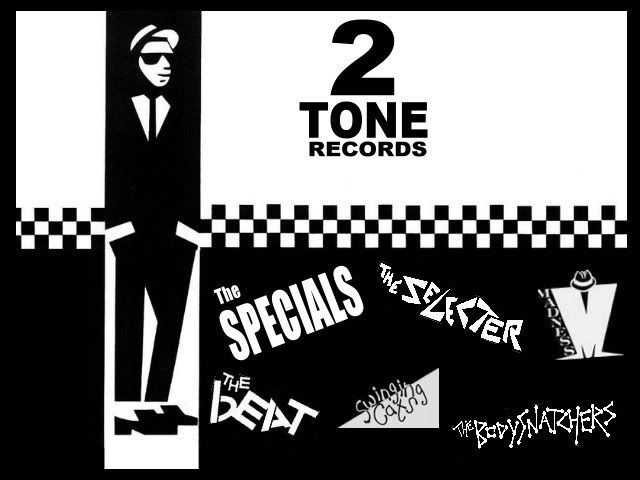
Bands like The Specials, The Selecter, Madness and The Beat gave reggae, and more so, ska, a greater prominence. UB40 were in full flow by the turn of the decade and for a while, the genre was the new rock’n’roll.
Since the ‘60s, the style has morphed into various sub-genres, all of which influence a lot of the music we hear today. Rocksteady; Boss Reggae; Roots Reggae; Lovers Rock; Dancehall – they’re all in there.
Remember also, ska broadened its depth and gave us ska punk and skate punk in the late 1990s and early 2000s.
Everyone knows some reggae songs; everyone loves some reggae songs; everyone and their granny knows who Bob Marley was; reggae influences can be heard in so much current musical styles. It has influenced so many of today’s mega pop stars.
Yet, it’s a style of music that in its own undiluted form seems to eschew the mainstream.
But you know what? I think I like it that way, just fine.
(Post by Colin ‘Jackie’ Jackson from Glasgow – August 2025)
Discover more from
Subscribe to get the latest posts sent to your email.
 onceuponatimeinthe70s.com
Nice Reggae testimonial Jackie.
Loved Bob Marley and the Wailers, largely because his brand of reggae was very melodic, almost soulful. Third World were pretty good too and apart from Dillinger’s classic “Cocaine in my Brain” I think that trio are the extent of my Reggae catalogue.
LikeLike
Yeah – I can understand that. I think perhaps a lot of people would agree with you.
Marley – melodic, yet you like the Dillinger classic? Now that I DON’T understand. 😉
Toasting in general is pretty mono-toned, and I’d say a fore-runner of ‘dancehall.’ NOT that melodic! 😀 Dillinger is a great exponent, mind (I have a 1976 LP of his, ‘Top Ranking’ which I use for annoying the neighbours on the odd, hot sunny, summer’s day we get. 😀
LikeLike
Very good overview. I still don’t know exactly what ‘dub’ music is but ska I quite like. Happily I listened to one of the few stations over here that would play The Specials, English Beat, Madness beyond ‘Our House’ in the ’80s so I heard some, more than most North American listeners I think
LikeLiked by 1 person
Cheers Dave. 🙂
Dub is really just an instrumental (often a version of an existing song) maybe stripped back a bit and with heavy echo and reverb implemented. (I’m sure there’s a bit more to it than that, but it’s probably way too technical for me!) 😀
Sounds great though.
LikeLiked by 1 person
Fun post, Colin! I have to admit most of my reggae “knowledge” comes down to Bob Marley. When I heard Marley’s excellent live album “Babylon By Bus” many moons ago, I was immediately hooked. I also remember hearing some UB40 songs on the radio back in Germany, as well as Peter Tosh’s rendition of Chuck Berry’s “Johnny B. Goode.” I’m sure I’ve also heard some dub punk by The Clash. But that’s it, I’m afraid!
LikeLiked by 1 person
That’s a pretty good grounding you have, Christian. Sound to me like you really are a ‘fan’ of the genre … without even knowing it. 😀
LikeLiked by 1 person