By George Cheyne: Glasgow, March 2021

Innocent until proven guilty – the revered cornerstone of our legal system. And it’s closely followed by every accused having the right to a fair defence.
Unless, of course, you get landed with a legal aid lawyer who doesn’t seem to understand what you’re saying.

Let me explain. I used to cover the courts in my days as a cub reporter for the Clydebank Press in the 1970s and sat in on some bizarre cases.

One that sticks out involved a district court trial of a guy accused of assault and his shoot-yourself-in-the-foot lawyer.
The prosecution case, backed up by two independent witnesses, was that Mr X had swung a couple of punches at Mr Y after an argument outside a boozer.
The defence lawyer, who had barely landed a blow of his own in the first part of the trial, put Mr X on the stand for his version of events.
Clearly, this was a brief who hadn’t done much briefing. After asking his client a few predictable questions about the night, he said: “What about the polemics with Mr Y?”
The accused seemed unsure how to answer and there was a slight satellite delay before he replied: “I lamped him.”
“I see,” said the lawyer, “And would it be fair to say this altercation was the root of the problem?”
Another delay before Mr X says: “No’ really, it was a dull yin.”
It was clear neither of them knew what the other was saying, but the lawyer pressed on regardless.
He asked: “So there was an element of wanton provocation involved?”
Mr X replied: “Aye, wan punch!”
The lawyer, who seemed to model himself on mealy-mouthed TV character Rumpole of the Bailey, looked across at the smirking procurator fiscal and knew something had gone wrong. He just didn’t know what.
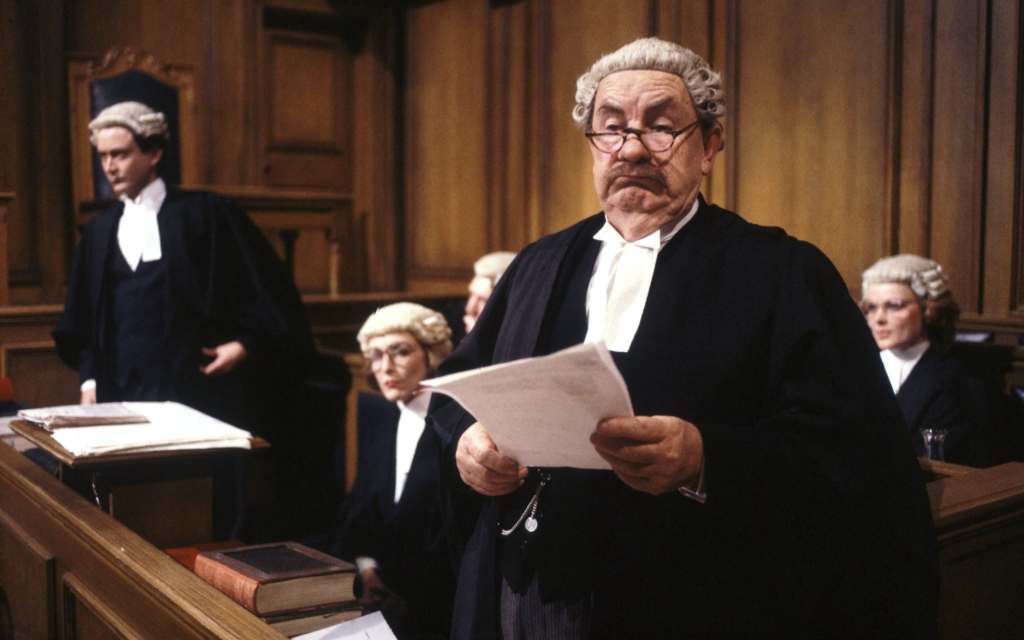
There was no realisation, no light-bulb moment that he’d stuck his client in it by letting him say what he did. He had a glance towards the Justice of the Peace for a steer.
All he got back was: “Is that the case for the defence?”
“Yes, your Honour. The defence rests,” the lawyer said in his best Rumpole manner.
The JP, doing well to keep a grin off his face after witnessing such a legal own goal, then turned to the fiscal to ask: “Any cross-examination?”
“I think that’s already been done for me,” he replied.
“Indeed,” replied the JP, “There’s no need to retire to consider the verdict…I find the accused guilty.”
No great surprise there, but I was completely taken aback another time when I found myself dragged into the court proceedings.
As a reporter, you’re told not to put yourself in the middle of the story – but sometimes that option is taken out your hands.
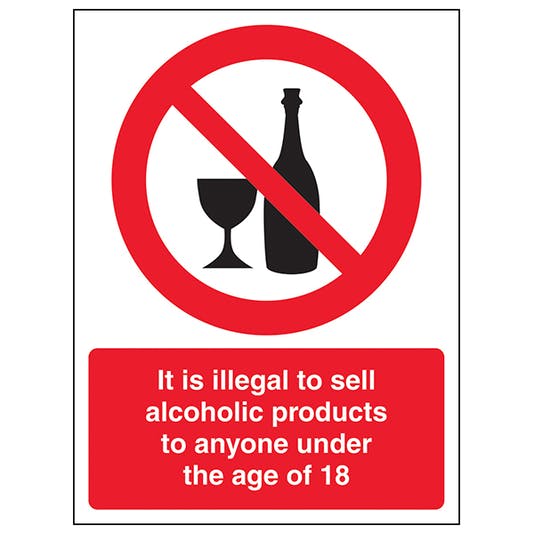
And that’s what happened when a shopkeeper was on trial for serving alcohol to someone under-age.

The prosecution evidence revealed that two plain-clothes police officers watched from outside the shop as the boy – who turned out to be 16 – went in and bought a half bottle of vodka and four cans of Carlsberg Special Brew.
He was stopped coming out and, after establishing his age, the police officers charged the shopkeeper.
It seemed a bit harsh, but the fiscal said the stake-out operation had been authorised because there had been a bit of previous involving kids as young as 14 buying booze.
The prosecution case tied everything up in a big bow before handing over to the defence lawyer.
It wasn’t an easy gig. All the evidence suggested the crime had been committed, so the only option left was a legal smokescreen.
Lawyer: “Did you know the boy was under 18?”
Shopkeeper: “Of course not. I’d asked his age and he said he was 19.”
Lawyer: “And you believed him?”
Shopkeeper: “Yeah, I would have been suspicious if he’d said 18 – but he told me he was 19.”
Lawyer: “So at that stage, because he identified himself as someone over 18, there was absolutely no reason to think you were the one breaking the law?”
At this point the fiscal clears his threat and rolls his eyes to get the Justice of the Peace’s attention.
The JP – let’s call him John – knows a theatrical prompt when he sees one and springs into action.
He explains that’s not a legitimate defence in a case like this as the smokescreen blows away in front of the lawyer’s eyes.
JP John then asks the shopkeeper if he has difficulty judging people’s ages.
“Err..no,” he replies with little conviction.
John scans the courtroom and my sixth sense tells me something’s about to go down – and it’s going to involve me.
True enough. John rests his eyes on me, aims a flat palm in my direction and asks the shopkeeper: “For instance, what age would you say this gentleman is?”
All eyes are on me as he replies: “About 21.”
John, who seems to be enjoying this little parlour game a bit much, then asks me: “And can the gentleman of the press reveal his age to the court?”
“I’m 17, your Honour.”
“Thought so, this doesn’t reflect well on you,” he tells the shopkeeper before finding him guilty and fining him.
The story doesn’t end there, though. I left court, went back to the office to find everyone had gone to the pub next door so I decided to join them.
I got myself a pint of Tennent’s, took a huge sip, turned round to see the others…and bumped slap-bang into John.

That’s John the JP, upholder of law and order in these parts, and the man I’ve just told in a court of law that I’m only 17.
I’m standing there with a pint in my hand and froth all over my top lip. But before I get the chance to say it’s a fair cop guv, John asks: “Can I get you another? I owe you one for getting you to help out there.”
Ironic or what?
Discover more from
Subscribe to get the latest posts sent to your email.

