Were you, indeed are you, ‘Beatles’ or ‘ Rolling Stones?’
Back in the day, even if you harboured just a passing interest in popular music, you were likely one or the other.
True, there were some odd ‘Stoned Beatles,’ or perhaps ‘Rolling Beatles,’ but generally the world was split into two distinct tribal factions.
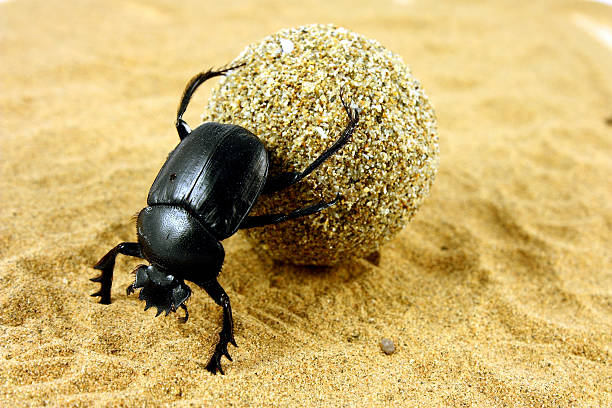
(Is there a prize for being the first person to crowbar a veiled reference to the dung-rolling beetle into an article about 1970s music? Interesting fact about the dung beetle in America – they reputedly save the U.S. cattle industry an estimated $380 million annually through burying above-ground livestock faeces.)
I was never really a Beatles fan, I have to say. I know that’s like some form of heretic confession, but the ten-year-old me must have been possessed by listening to ‘Sympathy For The Devil,’ back in 1968.
Other than the cartoon for ‘Yellow Submarine,’ a year later, The Beatles just didn’t do it for me.
No – I was very much on the side of The Rolling Stones. Indeed, I still am, and as I write this nonsense, I’m eagerly awaiting the delivery of their new album, ‘Hackney Diamonds’ which will hopefully arrive before my wife comes home from work and gives me grief for buying more vinyl.
Anyway, there’s no point us debating as to who is the better – The Beatles or The Stones. I think any fair-minded person would have to concede it being honours even.
Yeah, even though I still prefer the latter, I’ve eventually grown to enjoy the music of the Liverpool lads.
Yet there’s one area in the comparison of the two bands where an outright ‘winner’ could be justified, and that’s with regard to their own record labels.
The Beatles were first off the mark, in 1968 with their Apple Records label, followed two years later by The Stones, and their Rolling Stones Records.


For The Beatles, a major motivator was the death of manager Brian Epstein in 1967. The Fab Four reasoned the formation of Apple Corps would allow them to not only take control of their recordings, but also correct some of the bad business decisions landed on them by their old manager. – decisions that resulted in exorbitantly high tax bills and reduced income.
Although both bands’ desire was to keep everything ‘in house’ and facilitate the recording of solo projects, the prime difference between the two bands was the readiness of The Beatles to sign other bands and artists.
THE BEATLES:
On 26th August, Apple Records released it’s first four singles: ‘Hey Jude’ / ‘Revolution’ by The Beatles themselves; ‘Those Were the Days,’ by Mary Hopkin; ‘Sour Milk Sea’ by Jackie Lomax, and ‘Thingumybob,’ by The Black Dyke Mills Band. (Lennon & McCartney, as it happens.)
These recordings were allocated the catalogue numbers Apple 2, 3, 4 & 5.
Apple 1? Well that honour was given to Frank Sinatra of all people, for his recording, and singularly pressed ‘Maureen Is A Champ’ (sung to the tune of ‘The Lady Is A Tramp’) which was given as a surprise gift to Ringo’s wife, Maureen, to mark her 21st birthday!
(You can find that recording on You Tube, but, well ….)
But what a way to start a record label! ‘Hey Jude’ spent two weeks at number one in September 1968, being replaced by none other than Mary Hopkin’s ‘Those Were The Days,’ which remained at the top of the UK chart for six weeks.
Apple Records would also sign such luminaries as James Taylor, Billy Preston, who of course also had a playing association with The Rolling Stones, and arguably their most successful addition at that time, Badfinger.
Interestingly, a year or so down the line, and despite the success of its artists, the label was in a mess financially. Not one to pass on a business opportunity, The Rolling Stones manager Allen Klein offered his services as manager and was given the gig. One of his early decisions was to cut the roster. Future signings, of which there were less, now emanated from personal recommendations of The Beatles themselves.
Apple Records from that point on became more focussed on the releases of the band and individual members’ material.
THE ROLLING STONES:
Like The Beatles, The Rolling Stones initially used their label to release recordings of their own. The first album was the 1971, ‘Brian Jones Presents The Pipes of Pan at Joujouka.’ This is a recording of Sufi music by The Master Musicians of Joujouka, a Moroccan village band who so impressed the Stones’ guitarist. It’s widely accepted to be the first commercial release of what is now known as ‘World Music.’
The following year, the label released another Stones-based project, ‘Jamming With Edward!’ a three-year old recording of Mick Jagger, Bill Wyman and Charlie Watts jamming with Ry Cooder and Nicky Hopkins.
It wasn’t until 1973 that the first non-Stones related recording was released on the label. Cuban-American band Kraker (no – me neither) released their second album, ‘Kracker Brand’ on Rolling Stones Records and would go on to tour Europe with Mick and the boys. (They would also tour with likes of Sly & The Family Stone, Chuck Berry, Doctor John and Lou Reed, so they obviously had pedigree.)
The only other notable signing to the label was former Wailer, Peter Tosh. He released three albums on Rolling Stones Records. The first, ‘Bush Doctor’ featured Mick and Keith from the Stones. It produced the minor UK hit (peak #43) – a superb cover of The Temptations song ‘(You Gotta Walk) Don’t Look Back’ on which Mick Jagger duets.
(Mick really does have some ‘moves like Jagger’ on this one!)
And that, as far as I can make out, was the last of the external signings made to the label. That said, there were a couple of ‘jukebox’ releases / promos featuring Peter Tosh, with Olivia Newton John on the B-side of one, and Gonzalez appearing on the flip side of the other.
I’m sure there must be a story there, but I’m damned if I can find it!
Aesthetically, both labels have achieved iconic status and the quality of output by each band on their own label cannot be questioned. But would it be fair to say Apple Records trumped Rolling Stones Records merely on the basis of a more varied roster?
I don’t suppose I could argue that particular point with any conviction, but again it comes down to personal preference and loyalty, and you know where mine lie!
So I’m going to totally cop out and call it a draw. Again.
(But, it’s a ‘draw’ more in favour of The Rolling Stones than The Beatles! 😉 😊 )
__________
Discover more from
Subscribe to get the latest posts sent to your email.
 onceuponatimeinthe70s.com
Of course you know where I am lol…but yea I like both. I didn’t grow up in the sixties and I got into The Stones through reading about The Beatles…same as the Who and Kinks. For me it was the variety of the Beatles songwriting that won me over…from A Day in the Life to Helter Skelter. The Stones best period is the 5 album stretch…but their most creative period to me…was the mid sixties with Jones.
I wonder why the Stones label didn’t sign more? Well Apple had Badfinger… so I can’t go against them lol.
LikeLiked by 3 people
I KNEW I had to mention Badfinger! 😀
LikeLiked by 2 people
LOL…
LikeLiked by 1 person
Don’t you just love it when a llan comes together? 😉🤣
(I think The Beatles seem to have doing a lot of ‘damage’ themselves, anyway. )
😃
LikeLike
Sounds like Apple was a total mess, but points for discovering Badfinger and James Taylor.
LikeLiked by 3 people
Yeah … both quality, for sure. 😃
LikeLiked by 1 person
Padebleerfereeltife
LikeLiked by 1 person
Have to be Beatles 100%. But Stones still have an impressive discography & win on durability. 60+ years now. As for record companies, Apple seemed to do way better in getting talent signed up …but didn’t do all that well getting them off the ground, I’d say.
LikeLiked by 3 people
Try telling that to Max! 😉🤣
LikeLike