Paul Fitzpatrick: August 2025
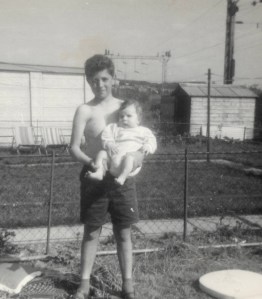
I was a single child until 1967 and then Barry came along, I’m not sure if he was planned but I remember him being referred to as “our little surprise”, so I’m guessing not.
Back then I was perpetually envious of friends who had older siblings, especially big brothers.
Someone to learn stuff from, someone to stand up for you, someone to play football with in the garden, someone to share the burden of being the only kid in the house and most importantly, someone who had a cool record collection.
The other Barry in my life, the much-missed Barry Smart, had an older brother, Stephen (or Sam to his friends). Sam had a lucrative paper round at the local hospital and flushed with disposable income, he would buy a couple of new albums every other week.
In the early 70s I used to go round to Barry’s when Stephen was out gallivanting and we’d plunder his record collection. That’s where I first heard Bowie’s Hunky Dory, Electric Warrior by T Rex, the first Queen album, and bands like The Groundhogs, Curved Air and Family.
As a 12-year-old, visiting Barry’s house was better than going to any record store in Glasgow… great music, Blue Ribands and Nesquik.
Cut forward a few years and I used to spend time hanging out at my pal Joe Hunter’s house.
Primarily because Joe’s mum Kathy used to bake a lemon meringue pie that would have Paul Hollywood shaking her arm off.
Knowing how much I loved this scrumptious dish she’d regularly make it, bravely holding off Joe and his older brothers, George and David (Chic to his friends) until she’d presented me with the first slice… God I loved that woman.
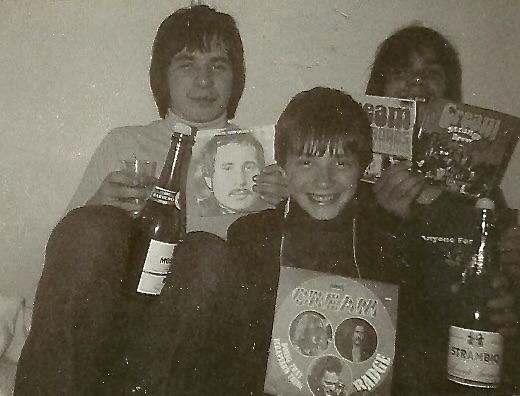
The Hunter boys all had fairly different tastes in music, George was heavily into the folk scene, Joe like me was into the music we were consuming at Glasgow’s bars & clubs at the time, and Chic had the most eclectic music taste of any human I’ve ever known.
I remember well the Hunter stereo wars……. Captain Beefheart blasting from one direction, Tom Paxton strumming harmoniously from another and James Brown funking out of Joe’s music centre, with Cathie telling them all to “turn the bloody noise down”
Another draw to Joe’s house was Chic’s record collection, it had a bit of everything and he was the first person I knew who was into Bob Marley, well before the release of Exodus and probably before Clapton’s version of “I Shot the Sheriff”.
When he wasn’t around, Joe and I used to rummage through Chic’s vinyls, mystified at the names of some of the bands, but there was always one album we’d pull out and play – Bob Marley & The Wailers Live!, which was released in the summer of 75 and probably remains my favourite live album to this day.
For a few years in the 70s Marley and his music was ubiquitous, loved and accepted by Reggae fans, Punks, Soul Boys and your regular Top of the Pops pop-pickers, alike.
No one had a bad word to say about Jah Bob, not even the UK music press who rarely had anything positive to say about black musicians in the 70s.
Reggae was nothing new of course, Ska had been around since the 60s and there had been one-off Reggae hits in the early 70s from the likes of Johnny Nash, Ken Boothe and Desmond Dekker, but in truth they were treated as novelty acts.
Marley brought reggae and its culture to the masses, and in the late 70s it seemed like everyone wanted a piece of Bob.
Exodus was the tipping point.
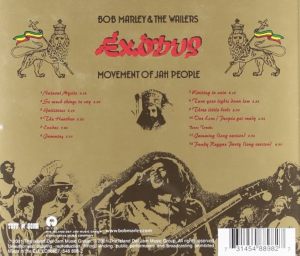
Released in the summer of 1977, Marley’s rise was perfect timing for a music industry in need of new idols after the burnout of established Glam, Prog and Legacy Rock stars.
Championed by Marley, Reggae slotted seamlessly alongside The Clash and Punk on one side and Donna Summer and Disco on the other and before we knew it, we had a raft of Reggae artists in the charts, ranging from bona fide Jamaican Rastafarians to lads from Birmingham singing Neil Diamond covers.
I never saw Marley live which is a regret but he only ever came to Scotland once. Playing two nights at the Glasgow Apollo in July 1980, a matter of weeks before he fell ill and stopped performing.
Marley passed away ten months after that Glasgow gig at the age of 36, his final words were to his son Ziggy…. “On your way up, take me up. On your way down, don’t let me down”.
I’d never really grasped how global Marley’s popularity was until I read that he’d sold as many albums in his short career as icons like Dylan or The Beach Boys, indeed Marley’s posthumous compilation album Legend shifted over 25 million copies, and was accompanied by a chart run of over 2,000 weeks; a fete matched only by Pink Floyd’s Dark Side of the Moon.
I loved Exodus, it was a record I played to death.
In truth, up until Bob Marley & The Wailers I’d always found Reggae to be fairly one dimensional but Marley’s blend – soulful, melodic, rhythmic was perfect for these ears, plus Exodus was one of those rare albums with no filler that you could just leave the needle on.
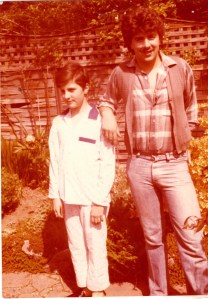
I remember on its release, Exodus being an album I’d regularly play when I was getting ready to go out, just soaking in the bath, listening to Bob and his Rastaman vibrations. Although I recall one night that my ritual was disturbed, I couldn’t find the album anywhere, just an empty sleeve…. then I heard the intro from “Jamming” bursting out of my young brother’s bedroom.
Job done, I thought!
A few Reggae Faves
Discover more from
Subscribe to get the latest posts sent to your email.


Well … obviously I’m gonna ‘like’ that post! 😀
You had a great grounding in music from Sam and The Hunters.
I’d never thought on it that way before, but similarly, now you mention it, it wasn’t so much Derek Sharp and Colin MacDuff that influenced my musical choices of the early ’70s, but their brothers Alan and Roddy.
(Good job on young Barry, too. 🙂 )
LikeLiked by 1 person